


Search the site

What is a great experience worth to you? All-inclusive dissected (Part 3/3)

This series of articles discusses the history, supply & pipeline of all-inclusive resorts globally and specifically in APAC (Part 1), deep-dive into the business model (Part II), and a comparison across traditional resorts and two all-inclusive brand specifics (Part III).
Part III
Brand specifics
While the above business model refers to traditional all-inclusive resorts, there are nuances across certain brands. There are also certain regional variations whereby some source markets are more food and beverage oriented than others. The following gives a side-by-side comparison across regular resorts, traditional all-inclusive resorts, Accor’s Rixos brand and Club Med.

Location
Investors should carefully assess the potential of their site location in terms of access. While regular resorts have greater flexibility, access comes more into focus for both Rixos and Club Med. Given the high occupancy levels at all-inclusive properties there is a need to ensure the right airlift capacity is provided. Rixosis focused on volume as their first resort in Asia-Pacific on Phu Quoc targeting 1,700 keys (over phases) reflects. Club Med, meanwhile, can drive demand to less developed destinations, which has been a hallmark of their concept from early days. A prime example is their upcoming Borneo resort 80km south of Kota Kinabalu and a project in Manado. At the same time, the family focus can open up a differentiated value proposition in more established destinations.
Setting
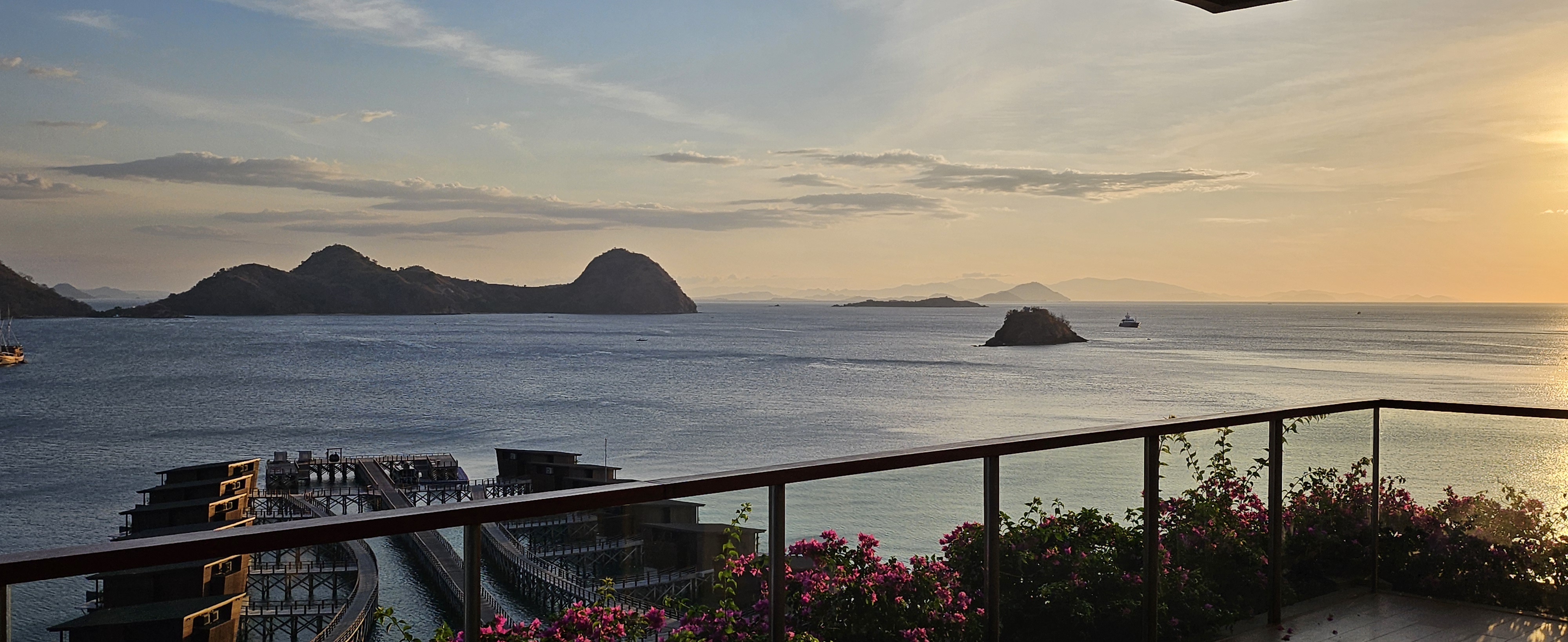
Needless to say, any potential site needs to have characteristics that are attractive for prospective guests, such as direct beach access or ski-in, ski-out capabilities. Sunset views are always a plus. The topography of a site (and subsoil conditions) can facilitate a resort’s development; however, they can also pose significant challenges. All-inclusive resorts need to select a potential setting more conservatively ensuring sufficient demand to – of course maximize occupancy. Club Med is most selective in that their current strategy targets beachfront sites and ski locations only.
Market Orientation
As resorts go, and traditional all-inclusive at that as well, they can come in all tiers, from top to bottom. Rixos on the other hand is firmly positioned in the luxury tier whereas Club Med targets the upper upscale tier. This difference would be most directly observable in the room size but also in the number of food and beverage outlets provided. Notably, Club Med is expanding their Exclusive Collection brand to compete at the higher end of the market.
Site area
The name all-inclusive alludes that there are more activities on-site than in a regular resort. The latter can be very basic indeed as revenue and costs are assessed for each offering. The holistic view all-inclusive resorts take usually leans heavier on site-area requirements. Which is one reason they tend to be more common in frontier and emerging destinations where land costs are still favorable. Land prices in say Nusa Dua or Phuket make any resort development a challenge as it is, let alone an all-inclusive resort. Site area requirements are naturally also driven by the room count. The larger the room count, themore land area is needed. Heigh restrictions would pose another limitation here. Some boutique all-inclusive properties akin to Baillie Lodges can featurea very small room count and thus have only limited land requirements – providedthey have the right setting. What stands out for Rixos and Club Med is the relatively high hurdle of 15ha for an entry-level resort size. In more development destinations, resort site areas are becoming increasingly compact towards 5ha from the more ideal 10ha.
Number of Rooms
Scale matters. Certainly, for intensive all-inclusive operations where economies of scale are paramount. It needs to be pointed out that in the absence of scale, prices will be higher. Affordable and small does not pencil. Similarly, there is a limit as to how far luxury can be scaled for both demand factors and service quality. Rixos see the minimum resort size for their city properties at 200 keys whereby Club Med requires a minimum of 250 keys. Club Med is currently the only brand that can consider up to 20% of the inventory as branded residences (as units for sale with rental program), clearly separated and with dedicated facilities.
Distribution Channels
As resorts (and hotels) nowadays go, distribution is about having the right mix. Direct bookings are the most desirable due to the lower costs. However, in the absence of strong or rather sufficiently strong direct booking channels (brand.com, app, call center, sales offices, etc.), alternative channels need to be developed. Many traditional all-inclusive operators were vertically integrated for a long time thus lowering costs and increasing economies of scale. However, the advent of OTAs created challenges and pressure from shareholders further put their business model under pressure. The bankruptcy of 178-year-old tour operator Thomas Cook in 2019 was the clearest sign. Certainly, the pandemic would have claimed Thomas Cook along with the many other travel agencies and smaller tour operators that went under. Those who survived either specialized or were boughtout. Disruption is real. What stands out are Club Med’s 72% direct booking that can trace back to a very large agency network in Europe that successfully shifted to an online model – supported by strong brand loyalty.
Branded Residences
In light of rising land prices in virtually any destination, investment returns are under pressure. Furthermore, the capital stack is demanding more aggressive returns. Unless the market is blessed by high average rates and low operating costs (such as in Maldives), return targets will be difficult to attain. One increasingly popular means to return capital to owners sooner is in the form of branded residences for sale. In APAC, branded residences can be found across the board from midscale to luxury brands and in hotels and resorts alike. As the branded residence move to mainstream has been relatively recent, operators are gradually implementing programs to match market demand. Among all-inclusive brands, Club Med was the first to incorporate branded residences into their resorts in the Alps and Mauritius. Their upcoming South African property will be the first resort with branded residences owned by a local developer.
Loyalty
As mentioned in an earlier section, all-inclusive resorts drive loyalty from service quality and guest satisfaction rather than costly – albeit powerful– operator programs. Some groups have successfully shifted this loyalty to their brand rather than individual properties. The positive reinforcements cannot be underestimated in terms of cost savings on both marketing and loyalty programs. Investors should always carefully evaluate the strength of operator’s loyalty programs versus costs and intensity of marketing efforts. The challenging part is in the diversity of source markets and understanding the strengths and weaknesses across each.
Facilities
As mentioned above, the main difference between all-inclusive resorts and regular resorts is in the offering of activities and amenities. The former drive higher utilization rates by default to enhance efficiencies while the latter may undergo significant soul searching in driving revenues versus justifying high costs. Where Rixos stands apart is in the incorporation of wellness into its resorts whereas Club Med emphasizes sports and family/kid’s facilities. For traditional all-inclusive resorts and even regular resorts, a spa can present multiple headaches. For one, it has relatively high operating expenses and further requires for expertise not every hotelier brings along. Creating a compelling experience toincrease revenues can be more time consuming than rewarding for many operators. Rixos and Club Med have wellness firmly in their DNAs, offering a range ofactivities and facilities at no extra charge.
Unique Selling Proposition (USP)
A regular resorts USP is usually a combination of the setting, product, and services. There will be variations and interpretations in its components yet usually you get what you see. Traditional all-inclusive resorts, unfortunately, often start from the opposite end of price bundling first. Reverse engineering a resort experience is difficult, and reviews of independent all-inclusive resorts are not always charming, though often they do find their niche market. However, plenty do excel and thrive in combing price bundling with the fundamentals of aregular resort. Where Rixos adds another layer is in driving variety in theresort experience through superior scale. Rixos resorts feature extensive food and beverage offerings and activities that regular resorts cannot sustain due to lower capture rates. Club Med’s formula further includes strong staff engagement with both front- and back-of-house team members and an overall community spirit, which is very rare in regular resorts.
Hyatt International
Hyatt currently operates 150 all-inclusive resorts with 55,000 keys across 11 all-inclusive brands. While the portfolio has yet to be rolled out in APAC, the region has been identified for future growth. Hyatt’s all-inclusive brands cover a widespectrum of offerings corresponding with specific target markets. Key trendsthe brands embrace include Wellbeing, Culinary, Sustainability, and Cultural Authenticity.
Conclusion
All-inclusive resorts had an early start in APAC but have failed to gain much traction while regional travel boomed from 2000 onwards. A learning curve may be to blame whereby investors are less familiar with the benefits of the business model while consumers may have a trust gap. From a consumer side, all-inclusive can provide experiences regular resorts would be hard-pressed to replicate.
Full article is available for download below. Happy Reading!
More News

AP Hospitality Bulletin Asia Pacific - July 2026


Subscribe to our newsletter

